The short answer
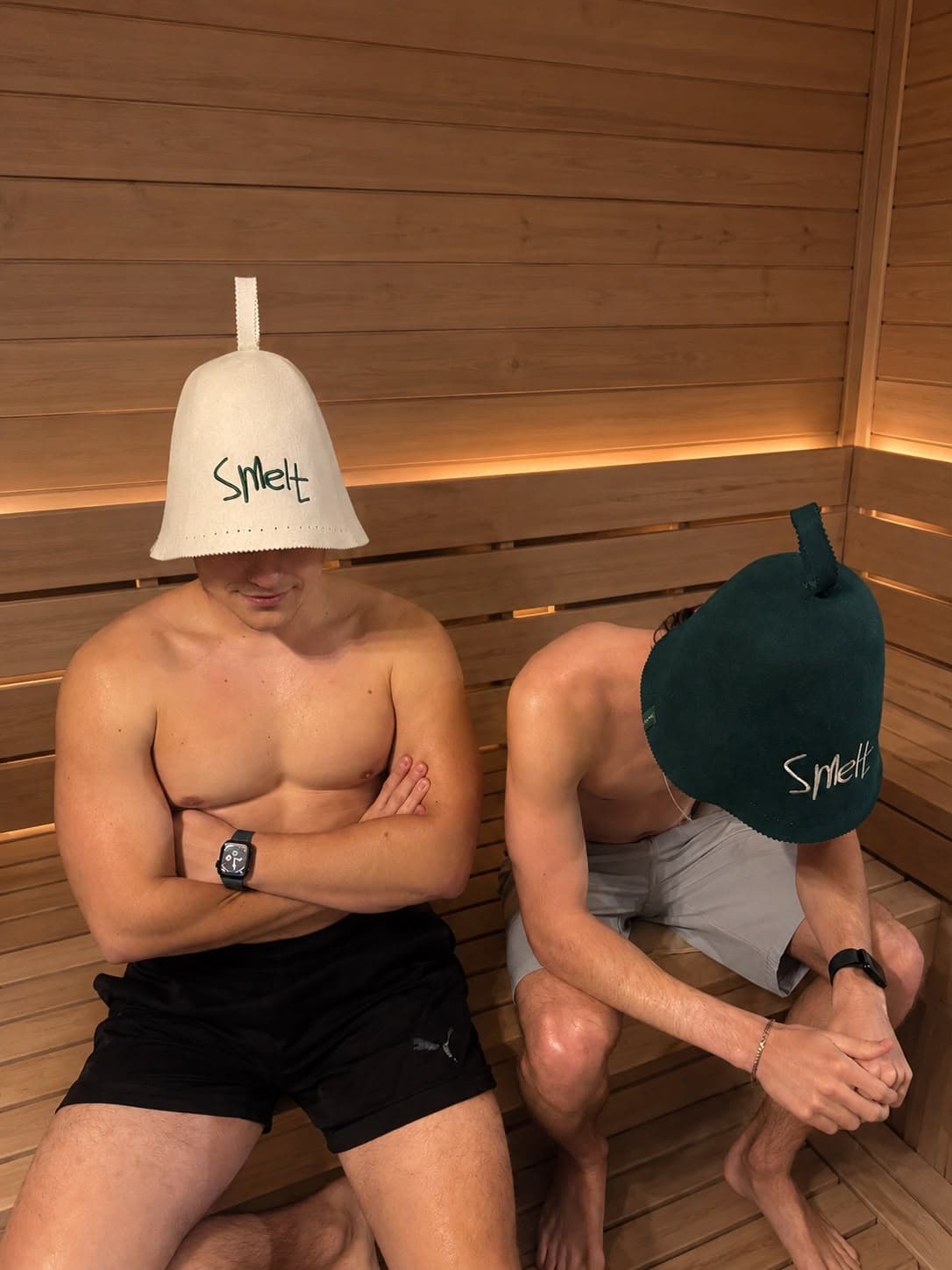
A sauna hat slows the rate at which heat reaches your scalp and ears. That is the whole job. It is a thick piece of wool felt that sits between the hottest part of the room and the most heat-sensitive part of you, and the result is that your head stops being the reason you leave the bench.
Everything else people claim for sauna hats (longer sessions, fewer post-sauna headaches, hair that doesn't feel fried) is downstream of that one mechanism.
Why your head cooks first
Hot air rises, and a sauna is a small room with a hot stove in it. By the time you are sitting on the upper bench, the air around your head can be 15 to 20°C hotter than the air at your feet. If the thermometer on the wall says 90°C, that is roughly what your scalp is in, not what your shins are in.
Your head is also badly equipped for it. The skin on your scalp is thin, it sits directly over bone with very little fat underneath, and your ears are thin flaps of cartilage with skin on both sides and not much blood flow to carry heat away. Ears are usually the first thing to actually hurt. Add hair that is either absent or wet and flattened, and there is very little insulation there at all.
So the sequence in an unhatted session is predictable: ears sting, the scalp starts to feel tight and prickly, and you get up, while your legs and torso are still perfectly happy. You are not leaving because you have had enough heat. You are leaving because about 5% of your surface area has.
What the felt actually does
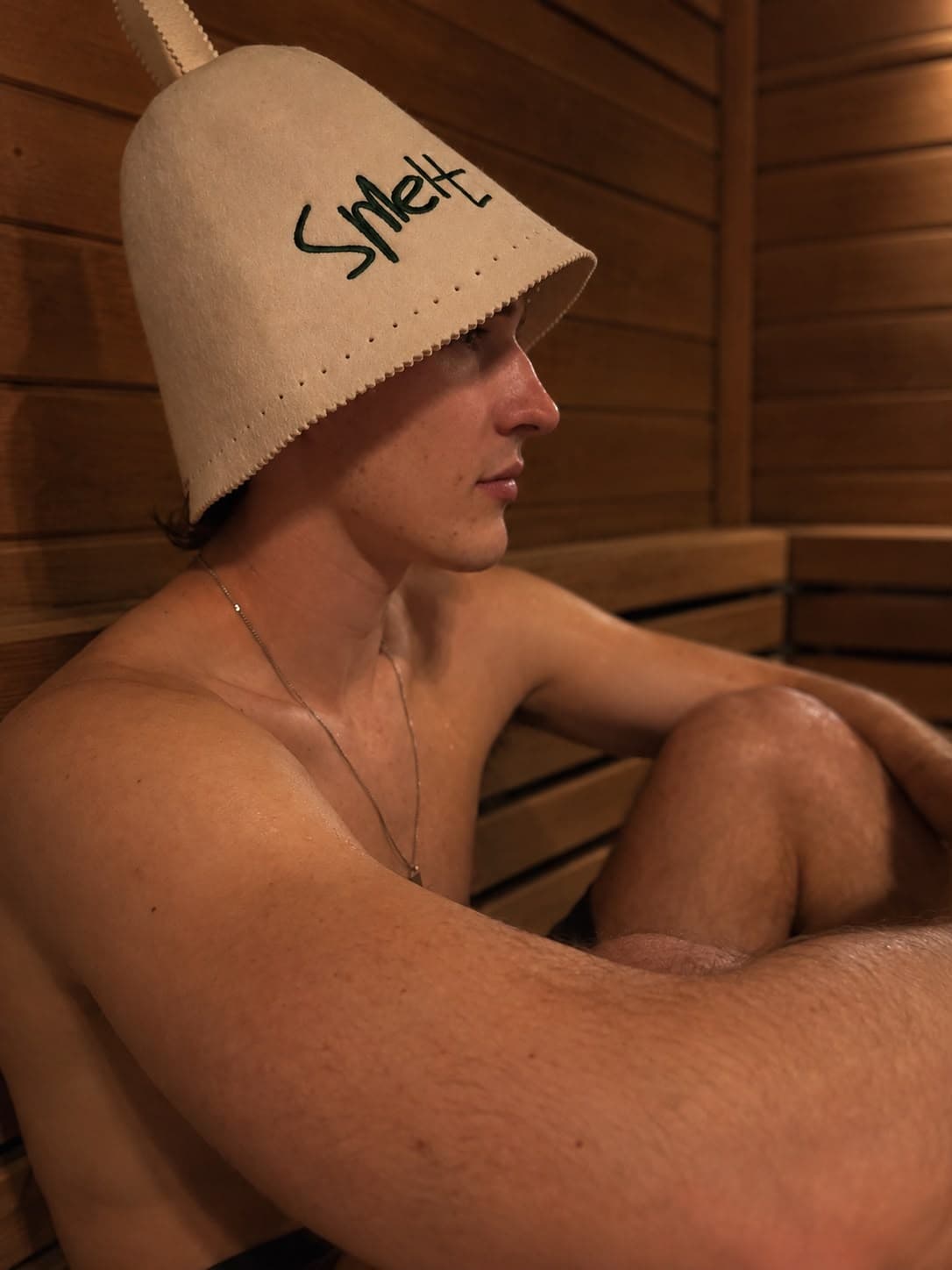
Wool felt is not a heat shield so much as a heat delay. Felting mats the fibres into a dense mass that is still mostly air by volume, and trapped air is a poor conductor. Heat has to work its way through that maze of fibre and pockets before it reaches your skin, which takes time, and a sauna session is short enough that the delay is the point.
There is a second thing happening. Wool absorbs a serious amount of water vapour into the fibre itself before it feels wet to the touch, and evaporation off the outer surface of the felt pulls energy away from the hat rather than out of you. That is why a sauna hat can feel hot on the outside and cool against your scalp at the same time.
The easiest way to feel it is to press the crown of your hat halfway through a session. The outside is genuinely hot. The inside is not. That gap is the hat doing its job.
What we noticed first-hand
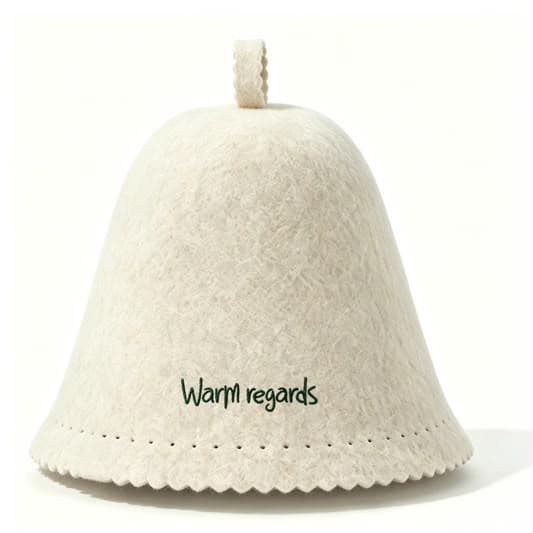
We did not come at this academically. Two of us, a sauna in Cape Town, and a repeated problem: we would last about four minutes on the top bench before one of us bailed. We had read about the felt hats the Finns treat as standard kit, couldn't buy a decent one locally, and eventually made our own, which is the only reason the Smelt hat exists at all.
The first hatted session was the convincing one. Same room, same temperature, and the limiting factor moved from the scalp to the chest, which is where it is supposed to be. Tom now sits comfortably at 95°C, which he could not do before. Marc still prefers a civil 85°C and a slow exit, which tells you the hat changes your ceiling rather than your personality.
Two smaller things we did not expect. First, the ear relief is more noticeable than the scalp relief: you stop doing that involuntary hunch to get your ears out of the heat. Second, hair. Repeated dry heat on wet hair is rough on it, and keeping it under felt instead made an obvious difference within a few weeks.
Doesn't covering your head make you hotter?
This is the first question everyone asks, and the answer is no, because of where your cooling actually comes from.
You shed heat in a sauna mainly by sweating from your torso, back, arms and legs, all of which stay bare. The hat covers a small patch at the top. It is not reducing your cooling capacity in any meaningful way; it is reducing the heat load on the one area that has no defence of its own.
What people are remembering is a woolly beanie in winter, where the goal is to keep your own body heat in. In a sauna the gradient runs the other way: the room is hotter than you are, so the same insulation that holds heat in outdoors holds heat out in here. Same material, opposite direction.
If anything, most people report their head feels cooler with a hat on than without, which is counterintuitive right up until you try it.
What a sauna hat does not do
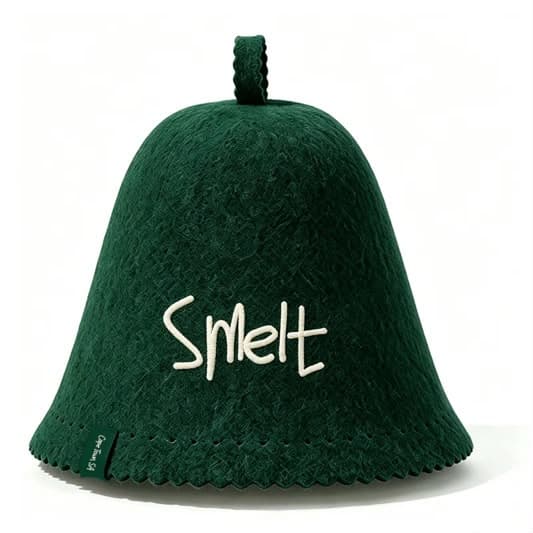
We would rather undersell this than have you trust a hat to do something it can't. A sauna hat is comfort equipment, not safety equipment.
It does not make a hot room safe, and it does not give you permission to sit through warning signs. Dizziness, nausea, a racing heart and a headache all mean get out, hat or no hat. It does not replace water, it does not shorten your cool-down, and it will not protect you if you lean against hot timber or touch the stove.
- It does not stop you overheating. Your core still warms at the same rate.
- It does not reduce how much you need to hydrate.
- It will not rescue a session you have pushed too far; nothing worn on your head will.
- It does nothing for your face, so if your cheeks are the problem, that is a towel-and-lower-bench issue.
Who gets the most out of one
The people who notice the biggest change are the ones whose heads are the bottleneck: anyone who sits on the top bench, anyone doing proper löyly with water on the stones, and anyone with thin, short or no hair. Also anyone whose ears have stung for the last three minutes of every session and who assumed that was just the deal.
If you go in at 70°C for ten minutes and never feel troubled, a hat is a nice-to-have rather than a fix. The hotter your room and the longer your session, the more it earns its place.
If you want the practical version of all this, covering what to look for in material, how it should sit, and how not to ruin it, that's how to choose a sauna hat.