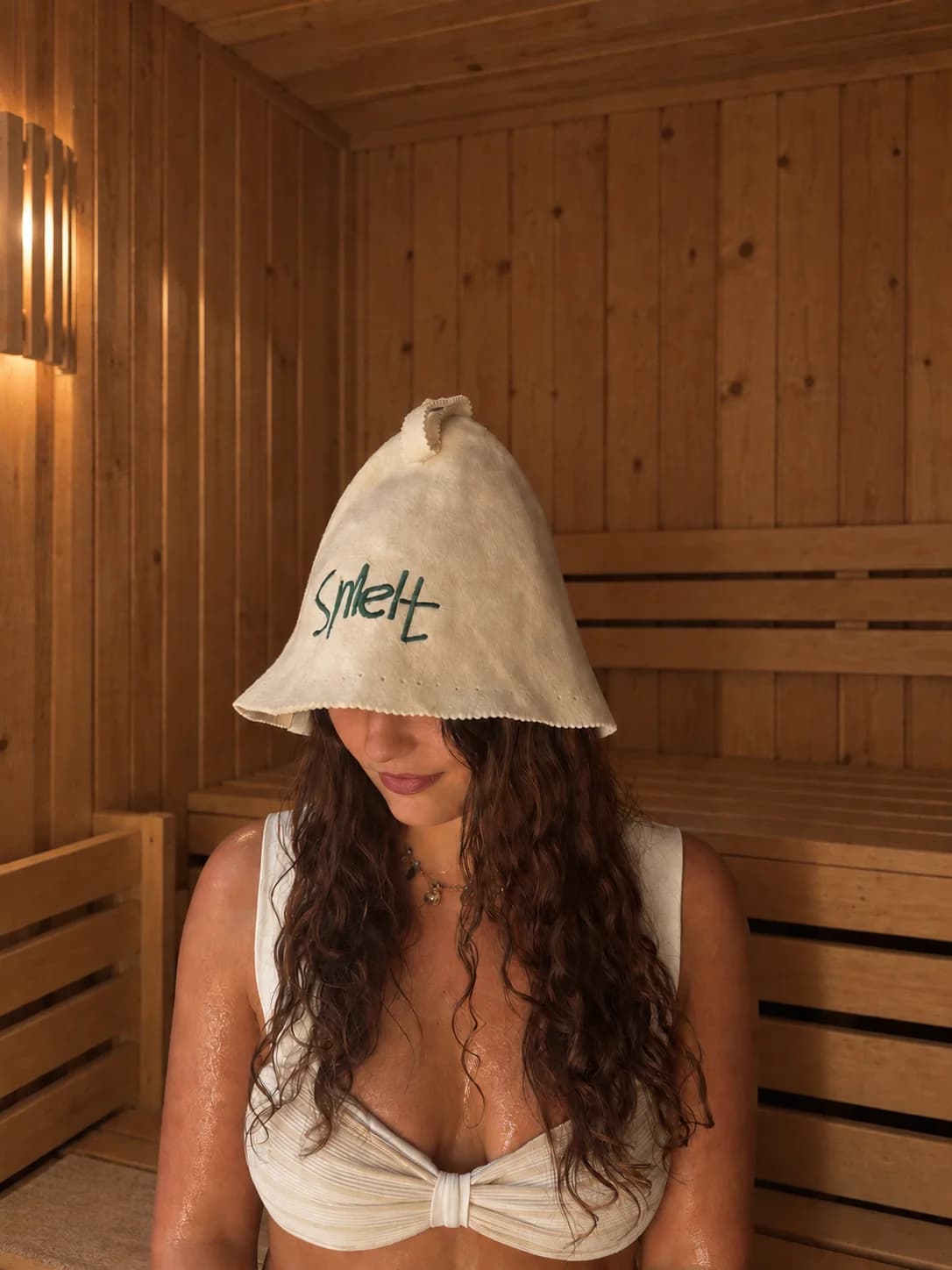
The short answer
Lightly damp, with cool water, in a normal dry sauna. That is the setting worth defaulting to, and it is what we do.
The part people get wrong is assuming that if damp is good then wetter is better. It isn't. There is a point where more water stops helping and starts making the hat worse than if you had left it alone, and plenty of people sail straight past it by holding the hat under a tap until it is heavy.
There is also a room-dependent caveat that almost nobody mentions: the wetting trick relies on evaporation, and a humid steam room has very little evaporation available. In that room, dry is perfectly sensible.
Three things water does to wool felt
The reason this question has a real answer rather than a preference is that wetting the felt sets off three separate effects. Two help you, one works against you, and the balance between them is what decides how damp is ideal.
The first is evaporative cooling, and it is the big one. Turning water into vapour takes a surprising amount of energy, and in a hot sauna that energy comes out of the hat's outer surface. While there is water evaporating off the outside of the felt, the outside cannot climb to the full air temperature of the room. You have effectively pinned the hot face of your insulation at a lower temperature, and everything underneath benefits.
The second is thermal mass. Water takes far more energy to warm up than wool fibre does, so a damp hat simply takes longer to get hot. This buys you time rather than protection, which is exactly the right currency, because a sauna session is short.
The third effect is the one that catches people out: water conducts heat roughly twenty-five times better than air does. Wool felt insulates because it is mostly trapped air by volume, so every pocket you fill with water is a pocket that has stopped insulating and started conducting. We make the same point about why cotton fails in a sauna, and it applies to a soaked wool hat too.
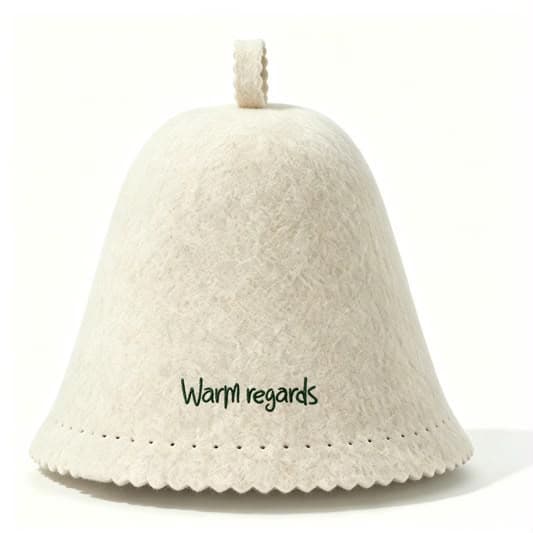
Why soaking it backfires
Put those three effects together and the shape of the answer appears. A light dampening gets you most of the evaporative cooling and most of the thermal mass while leaving the air structure of the felt broadly intact. The two benefits land, the penalty stays small.
Saturate it and the trade flips. The air pockets flood, the felt's insulating value drops sharply, and you are now wearing a dense wet mass pressed against your scalp with a direct conductive path through it. The evaporative cooling at the surface is still happening, but it is no longer enough to make up for having thrown away the insulation underneath it.
You can feel this one yourself, which is the best kind of claim. A properly soaked hat feels pleasant for about two minutes and then starts feeling heavy and uncomfortably warm against the scalp, usually earlier than a dry hat would have. It also drips down your neck, and by the back half of the session the water it is carrying is no longer cool.
How damp is lightly damp?
Vague advice is useless here, so here is the test we actually use. Wet the hat under cool running water, then squeeze the water out until it stops dripping entirely. Not nearly. Entirely.
What you want afterwards is felt that is cool and damp to the touch, still springy rather than limp, and roughly the weight it was when dry. If it feels heavier in the hand, it holds too much water. If squeezing it produces a trickle, it holds too much water. Felt that has gone floppy and dense has definitely gone too far.
Use cool water, not warm. Part of the immediate benefit is simply that you have put something cool on your head, and there is no reason to throw that away. Cool water is also the right call for the wool itself, which we go into at the end.
- Right: cool, damp to the touch, springy, no drips when squeezed, same weight as dry.
- Too far: heavy in the hand, limp or dense, drips at all, water runs down your neck in the room.
The room changes the answer
This is the part that gets left out of almost every discussion of this, and it matters more than the exact amount of water.
Evaporative cooling needs somewhere for the vapour to go. A traditional dry sauna is hot and relatively low in humidity, so there is plenty of capacity in the air and the water in your hat evaporates readily. That is the condition the wetting trick is designed for, and it works well.
A steam room is the opposite. The air is already close to saturated, so very little will evaporate off your hat no matter how damp you make it. You have given up most of the benefit and kept the whole conduction penalty, which is the wrong side of the trade. In a steam room we would just wear it dry and let it take up moisture at its own pace.
A dry sauna where someone is throwing a lot of water on the stones sits between the two. Right after a good pour the room is briefly very humid and the wetting advantage dips, then it returns as the room dries out again. Not worth managing actively, but it explains why the effect feels stronger on some days than others.
Your sweat wets it anyway
Here is the observation that puts the whole debate in proportion. Ten minutes into a real session, your hat is damp whether or not you wetted it, because your scalp has been sweating into it the entire time.
So the decision is not really wet hat versus dry hat. It is about the first five or ten minutes, which happen to be the minutes when the room feels hottest to you and when most people decide whether they are enjoying themselves. Starting damp front-loads the cooling into the part of the session where you need it most. That is a smaller claim than the internet usually makes for it, and it is the honest one.
It also explains the banya habit of re-wetting between rounds rather than once at the start. If you are doing several rounds with cool-downs in between, running the hat under cool water each time resets both the temperature and the evaporation, and takes about four seconds. That is the version of this worth adopting.
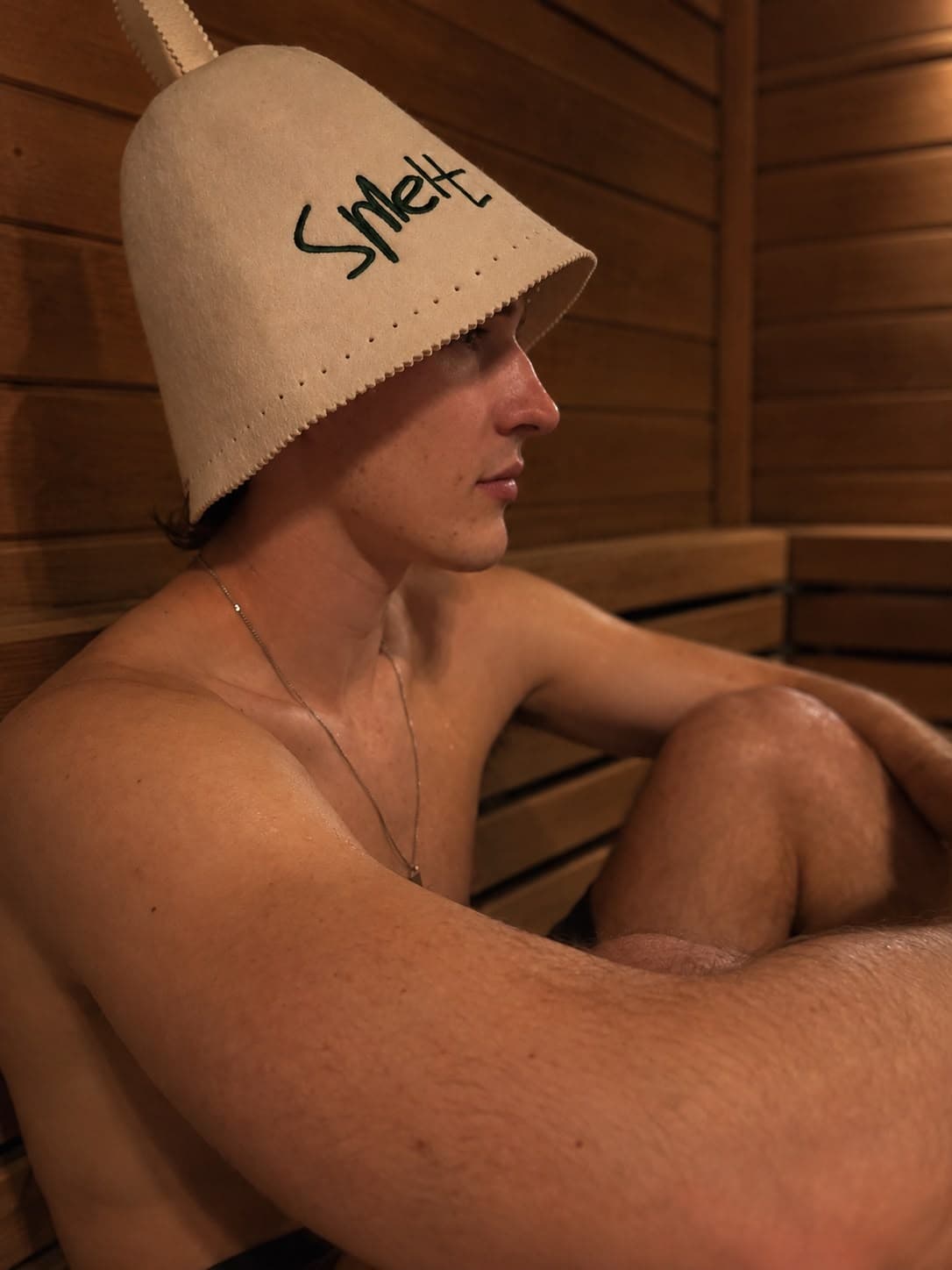
What we actually do
Marc wets his, every time, and does it again between rounds. At a civil 85°C with a slow exit, the damp start is most of what makes the first few minutes pleasant rather than something to be endured.
Tom often starts dry, mostly because he goes hotter and does fewer, shorter rounds, and at 95°C he would rather have the full thickness of dry felt working for him from the first second. Both of us think the other one is slightly wrong about this, which is roughly where the honest answer sits.
We should be straight about the limits of that. We have not put a thermocouple under the felt and measured scalp temperature against time, so we are not going to pretend we have numbers. What is above is the mechanism, which is sound, plus a lot of repeated sessions by two people who pay attention. The one thing we are confident about, because it is unmistakable, is that a soaked hat is worse than either.
When to skip wetting entirely
Cases where we would not bother, or would actively avoid it.
- A steam room or any very humid room, where evaporation has nowhere to go.
- A short session, ten minutes or less, where the hat was never going to get properly hot anyway.
- No access to clean cool water. A shared plunge pool or a communal bucket is not where you want to be soaking something you then put on your head.
- You are going straight home and straight into a bag. A hat that goes damp into a sealed bag is the one that starts to smell.
- A cold start in a room still coming up to temperature, where you will be sitting in moderate heat for a while regardless.
Doing it without wrecking the hat
Wetting a wool felt hat is not hard on it, as long as you avoid the two things that genuinely damage felt: heat plus agitation, and being stored damp.
Cool water only. Hot water combined with any kind of rubbing or wringing is how felting happens, and more felting means a smaller, stiffer, harder hat. Squeeze the water out in your hand rather than twisting it, reshape it with your fingers while it is damp, and let it dry in air afterwards rather than near a heater.
The important one is what happens after the session, not before it. A hat you wetted started wetter, so give it a bit more drying time and somewhere airy to do it. The full routine, including what to do if it has started to smell, is on the care guide.